What It Is and Key Specs
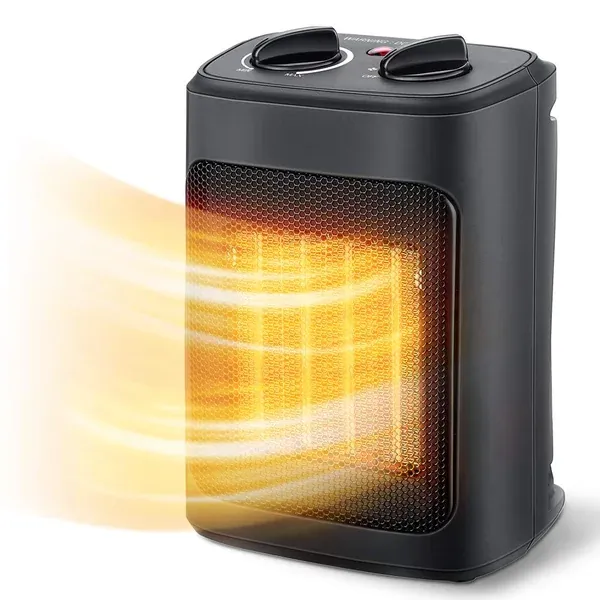
The LuvemHome space heater is a 10-inch, 1500W portable electric unit built around PTC (Positive Temperature Coefficient) ceramic heating technology. PTC ceramics are a common choice in this category because they self-regulate — their electrical resistance rises as temperature increases, which helps prevent runaway overheating compared to some older coil-based designs.
The heater offers three heat settings (Low, Medium, High) plus a fan-only mode, controlled via a dial thermostat that monitors ambient air temperature and cycles the unit to maintain the selected level of warmth. At 10 inches, it falls on the compact end of the market and is designed to be moved room to room using an integrated ergonomic handle. According to the manufacturer, the unit reaches operating temperature within roughly three seconds of being switched on.
Intended use cases, per the listing, include bedrooms, offices, kitchens, guest rooms, and living rooms — essentially any enclosed personal space where heating a smaller zone is more practical than running whole-home HVAC.
Build Quality and Safety
The LuvemHome heater incorporates two safety mechanisms called out by the manufacturer: an overheat protection sensor and a tip-over switch, both of which are designed to cut power automatically if the unit overheats or is knocked off a level surface. The manufacturer explicitly advises placing the heater only on flat, stable surfaces, noting that damage may result from inclined positioning.
On the broader safety landscape: the U.S. Consumer Product Safety Commission (CPSC) has recalled other electric space heaters in this category for fire and burn hazards — for example, GoveeLife and Govee Smart Electric Space Heaters were recalled in 2025 (
cpsc.gov). As of July 24, 2026, no recall record naming this specific LuvemHome model was found, but that absence has not been independently verified as a confirmed all-clear. Shoppers should check the current CPSC recall database before purchasing any space heater. Industry safety standards for portable electric space heaters in the U.S. Are addressed under Underwriters Laboratories standards UL 1278 and UL 1042 (Wikipedia); the listing does not explicitly state UL certification, so buyers should confirm this detail independently.
The manufacturer also recommends reviewing the User Guide in the Product Guide and Documentation section before use — an important step given that circuit loading is a real concern with 1500W appliances, as detailed by home heating resources: a single 1500W heater can trip a standard 15-amp household circuit if other loads are sharing it (Hoffmann Brothers; Hunker).
Real-World Fit: Who It Suits, Who Should Skip
This heater is a practical fit for individuals who want to supplement heating in a single small-to-medium room rather than heat an entire home — a use pattern that the manufacturer explicitly positions as a way to reduce reliance on central heating systems. The fan-plus-thermostat combination means heat distribution is active rather than purely radiant, which tends to warm occupied spaces more evenly than bare radiant panels.
The compact, handle-equipped form factor makes it well-suited for renters, apartment dwellers, or anyone who needs to move a heater between a home office and a bedroom, for example.
Who should skip it: Those needing to heat large open-plan rooms or whole floors will find a single 1500W unit insufficient. Anyone without a dedicated or lightly loaded 15-amp circuit should be cautious. Buyers who prioritize independently verified third-party safety certification should confirm whether this unit carries UL or ETL listing before purchasing.
Honest Limitations
- No confirmed third-party safety certification stated in the listing. UL or ETL certification is a meaningful benchmark in this category; its absence from the product description is worth verifying before purchase.
- Dial thermostat, not digital. Precise temperature targeting isn't possible — the dial offers relative control rather than a specific degree setting.
- No timer or programmable scheduling. Competing products at various price points in the category do offer timer functions, which add convenience and can improve energy management.
- Circuit compatibility requires attention. At 1500W, this heater draws close to the capacity of a standard household circuit. Running it alongside other appliances on the same circuit risks tripping breakers, as noted by electrical and heating resources (metroheating.net; hunker.com).
- Placement restrictions apply. The manufacturer's own note cautions against use on uneven surfaces, which limits flexibility in some real-world settings.
Darrell Steward
1 Feb, 2021Brilliant
This is the best product that has ever been made. It is also one of the best items in the world right now. Definitely go for it.
Albert Flores
17 Oct, 2020Just WOW
It's good to use this product for development as it has very good performance, display quality and all other features.