What It Is and Key Specs
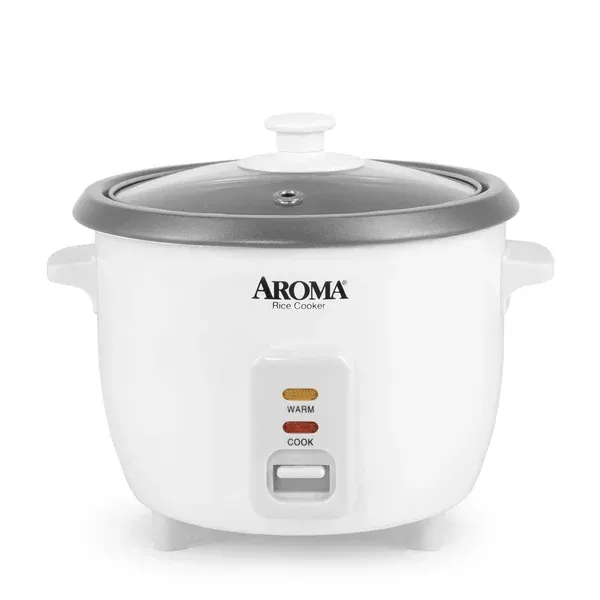
The Aroma ARC-363NG is a compact, pot-style electric rice cooker rated at 6 cups cooked (3 cups uncooked) with a 1.5-quart capacity. It operates on a single-button design: add rice and water to the marked fill lines, press the button, and the appliance takes over. According to Aroma's manufacturer information, its rice cookers use moisture sensors to automate the cooking process — no stirring, no lid-lifting, no timers required. When the rice is done, the unit automatically switches to Keep Warm mode, holding the food at serving temperature until you're ready.
Beyond rice, the listing positions the ARC-363NG as a multicooker capable of oatmeal, soups, and dips, though the core design is optimized around grains. The appliance ships with a cooking manual that includes tips and water-ratio guidance — a detail worth noting, since Aroma's own FAQ emphasizes that the wrong rice-to-water ratio is the most common source of problems with their cookers.
Build Quality and the Ceramic Inner Pot
The standout construction detail is the inner pot's CoreCoat ceramic coating, which Aroma states is naturally nonstick and made without PFAS — a meaningful distinction in a market where many competing pots still rely on PTFE-based coatings. Both the inner pot and lid are removable for cleaning, keeping the maintenance routine straightforward.
The exterior is white polypropylene in a compact footprint suited to small kitchens, dorm rooms, or counters where space is tight.
A note on safety: The U.S. Consumer Product Safety Commission (CPSC) has previously recalled rice and slow cookers from other manufacturers — for example, a 2017 recall of Sherwood Marketing's 3 Squares Rice and Slow Cookers for fire and electric hazards (
cpsc.gov). As of July 24, 2026, no CPSC recall record names this specific Aroma model, but that is not a verified all-clear. Buyers should check the CPSC database for current records before purchase.
Ease of Use
The one-touch operation is as simple as rice cookers get. Aroma's published cooking guidance confirms there is no need to stir or monitor the pot during cooking. The inner pot includes water-level measuring lines, removing one variable for new users. Aroma also maintains a US-based customer service team in San Diego, CA, and an online FAQ and recipe library — resources that matter given that water ratios and grain types can require some initial calibration.
Published coverage at Rice Cooker Review Central describes the ARC-363NG line as offering strong value, citing versatility and consistent grain results as primary strengths.
Real-World Fit: Who It Suits, Who Should Skip
This cooker is well matched to:
- Singles, couples, and small families who rarely need more than 6 cooked cups at a time.
- Dorm and small-apartment dwellers who need a compact appliance that doubles as a soup or oatmeal pot.
- PFAS-conscious cooks who want a nonstick surface without PTFE or related compounds.
- First-time rice cooker buyers who want minimal controls and a low learning curve.
It is a poor fit for:
- Households cooking for four or more people regularly — the 1.5-quart capacity will require multiple batches.
- Cooks who want pressure cooking, multi-function digital controls, or delayed-start scheduling; this is a pot-style, single-button unit only.
Honest Limitations
Published troubleshooting sources note that Aroma rice cookers' moisture-sensor design is sensitive to water ratios — too much water is the most frequently cited cause of subpar results. New users should follow the measuring lines and consult the included manual closely rather than estimating. Third-party repair guides also identify the heating element, thermal fuse, and thermostat as the components most likely to fail over time in pot-style cookers of this type, and note that for older or heavily used units with internal faults, replacement can be more cost-effective than repair — a reasonable consideration at this price tier.
The single-button design, while a strength for simplicity, means there is no way to fine-tune cook settings for different grain types beyond adjusting water ratios manually.
Darrell Steward
1 Feb, 2021Brilliant
This is the best product that has ever been made. It is also one of the best items in the world right now. Definitely go for it.
Albert Flores
17 Oct, 2020Just WOW
It's good to use this product for development as it has very good performance, display quality and all other features.