What It Is and Key Specs
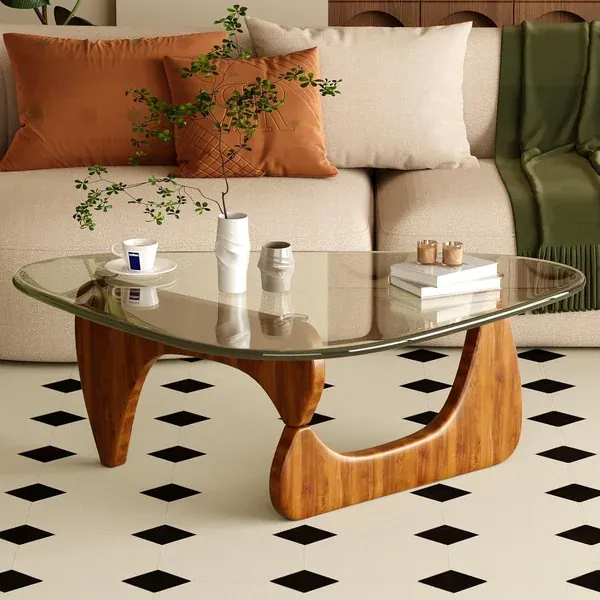
This coffee table is a 32-inch round-top piece designed in a mid-century modern aesthetic. The top is clear tempered-style glass, and the base is constructed from walnut and oak in a triangular configuration. According to the manufacturer listing, the table has a rated weight capacity of 130 lbs and is sold as a set of one. The listing also notes a manual measurement tolerance of 0.78–1.18 inches, which is worth factoring in if you're working within a tight furniture layout.
The color option reviewed here is Transparent/Walnut — a neutral pairing that the listing describes as intended to complement modern and contemporary living spaces through "clean lines and neutral tones."
Build Quality and Design
The manufacturer highlights the triangular base as both a visual and structural choice, describing it as providing "exceptional stability" alongside the glass top. The base material is listed as a combination of walnut and oak — a solid wood construction that, per the listing, requires only occasional dusting to maintain. The glass surface is described as stain- and scratch-resistant, wipeable with a damp cloth.
The mid-century modern silhouette — characterized by tapered or angled leg structures and uncluttered surfaces — is well-documented as a durable design trend in the category. As published guides on the style note, this type of table typically prioritizes visual lightness while maintaining a functional surface, which aligns with what this listing describes.
Safety note: As of July 24, 2026, there are no CPSC recalls on record for coffee tables of this type at
saferproducts.gov.
Real-World Fit: Who It Suits, Who Should Skip
The 32-inch footprint positions this table well for small to mid-size living rooms, bedrooms, or home offices — uses the manufacturer explicitly calls out. For context, published mid-century modern furniture guides suggest that a coffee table height of 16–18 inches tends to feel most comfortable alongside a standard sofa seat height of around 18 inches. Prospective buyers should confirm the exact height of this table against their own seating before purchasing, especially given the noted measurement tolerance.
This table suits buyers who prioritize a clean aesthetic and easy upkeep over storage. The open glass-top design offers no drawers, shelves, or hidden compartments — a deliberate minimalist choice that works well for decorative or light daily use (drinks, books, small decor items) but may frustrate those who want integrated storage for remotes, magazines, or other living room clutter. Competing models in the mid-century modern category — including options available at retailers like AllModern — frequently offer splayed-leg designs with open lower shelves or enclosed storage, giving shoppers alternatives if storage is a priority.
The 130 lb weight limit is generous for typical surface use, but buyers should stay within that threshold and avoid concentrated loads on the glass surface.
Honest Limitations
No product is without trade-offs, and this table has several worth naming clearly:
- No storage. The design is surface-only. Shoppers needing shelf space or concealed storage will need to look elsewhere in the category.
- Glass surface care. While the listing describes the top as scratch-resistant, glass tops in general require more careful handling than solid wood surfaces — avoiding abrasive cleaners and heavy impacts is standard practice for this material type.
- Measurement variability. The manufacturer explicitly flags a tolerance of up to 1.18 inches from stated dimensions due to manual measurement. This is not unusual for furniture at this tier, but it is worth verifying fit in your specific space.
- Single-unit sale. This table is sold individually, not as part of a set, so buyers looking to pair it with matching side tables would need to source those separately.
Category Context
The mid-century modern coffee table segment is well-populated, with options ranging from storage-forward designs to purely decorative minimalist pieces like this one. This table occupies the minimalist end of that spectrum — favoring aesthetic simplicity and easy maintenance over utility features. That's a legitimate design choice, but it means the right buyer is someone whose living space and habits align with a clean, uncluttered surface rather than active daily organization needs.
Darrell Steward
1 Feb, 2021Brilliant
This is the best product that has ever been made. It is also one of the best items in the world right now. Definitely go for it.
Albert Flores
17 Oct, 2020Just WOW
It's good to use this product for development as it has very good performance, display quality and all other features.