What It Is and Key Specs
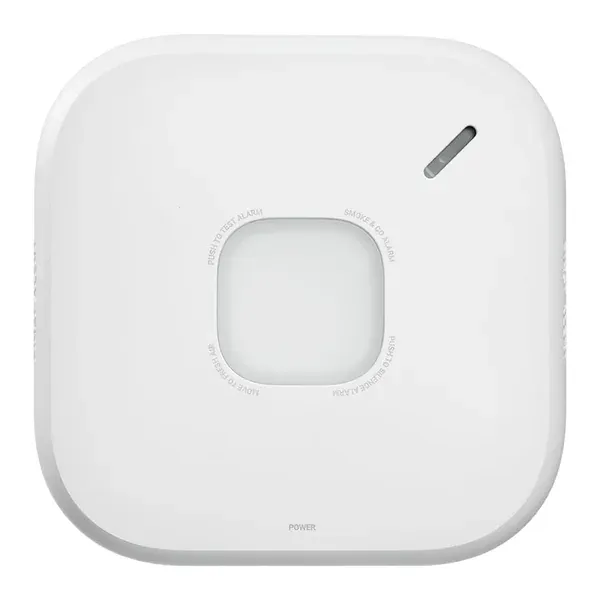
The First Alert SC5 (model SMCO600NV-AC) is a hardwired combination smoke and carbon monoxide alarm with built-in Wi-Fi smart capability. According to the manufacturer and official First Alert product pages, it runs on hardwire power with a battery backup for continuous protection during outages, and it pairs with the First Alert app to push remote alerts to a smartphone when smoke or CO is detected.
A notable spec is its compatibility with Google's Nest Protect alarm — the SC5 is designed to integrate into an existing Nest Protect hardwired setup without rewiring, thanks to a Quick Connect adapter plug. Per the First Alert Store's FAQ coverage, replacing a hardwired Nest Protect with the SC5 is a direct swap using that adapter. The unit also supports hardwire interconnect, meaning when one compatible alarm triggers, all interconnected alarms in the home sound simultaneously.
Voice alerts form a core feature: the alarm announces the type of hazard (smoke vs. CO) and the location, so occupants know where the danger is originating rather than responding to an undifferentiated siren. The manufacturer describes this as the "Heads-Up" warning system. Precision Detection Technology is listed as the mechanism intended to reduce nuisance alarms while still providing early warning.
Build Quality and Safety
No CPSC recalls are on record for First Alert products of this type as of July 24, 2026, per the U.S. Consumer Product Safety Commission's SaferProducts.gov database. First Alert (BRK Brands) is a long-established name in residential fire and CO detection, and the SC5 line is sold through the brand's own retail store, authorized Canadian distribution channels, and third-party specialty retailers — coverage that generally tracks with consistent manufacturing standards.
The Quick Connect Plug is a practical quality-of-life detail: it allows the alarm to be removed and replaced without touching the home's wiring, which reduces the risk of installation errors during routine replacements.
Real-World Fit: Who It Suits, Who Should Skip
The SC5 is well-matched to homeowners who already have — or plan to build — a hardwired interconnected alarm system and want to add smartphone monitoring without switching to a full proprietary ecosystem. It is particularly relevant for households currently running Nest Protect hardwired alarms who want to transition to or supplement with a First Alert device, since the quick-connect compatibility removes the usual rewiring friction.
Renters or anyone in a home without existing hardwired alarm infrastructure should skip this model — it requires a hardwired connection, making it unsuitable for a plug-in or purely battery-operated setup. Similarly, buyers looking for a standalone alarm with no app dependency may find the smart features unnecessary overhead.
The First Alert app requirement for remote alerts means the alarm's smart functionality depends on a functioning Wi-Fi network and a maintained app account. Those unwilling to manage that dependency will still get local voice and siren alerts, but the remote notification value is lost.
Interconnect and Smart Ecosystem Compatibility
As noted across manufacturer sources and third-party coverage from SmokAlert.net, the SC5 is compatible with other First Alert and BRK interconnect-enabled alarms, so it can anchor or expand an existing whole-home system. The Nest Protect integration is a specific selling point: the SC5 and a Nest Protect can coexist on the same hardwired interconnect loop, according to the First Alert Store's published FAQ — though buyers should verify specific model compatibility with First Alert directly before purchasing.
Honest Limitations
A few real-world considerations are worth flagging. Published troubleshooting coverage (via JustAnswer) documents instances of false smoke alerts and red-light flash patterns that can require diagnostic steps to resolve — an issue not unique to First Alert but worth knowing before purchase. Like all combination alarms, the SC5 will eventually require replacement on a manufacturer-recommended schedule (typically 7–10 years for combination units), and that timeline should factor into long-term cost planning. The smart features also introduce a dependency on app ecosystem continuity; if First Alert were to discontinue or significantly alter the app, remote alert functionality could be affected. Finally, voice location alerts are only as useful as the zone labels configured during setup — buyers should plan to complete that setup step for full benefit.
Darrell Steward
1 Feb, 2021Brilliant
This is the best product that has ever been made. It is also one of the best items in the world right now. Definitely go for it.
Albert Flores
17 Oct, 2020Just WOW
It's good to use this product for development as it has very good performance, display quality and all other features.