What It Is and Key Specs
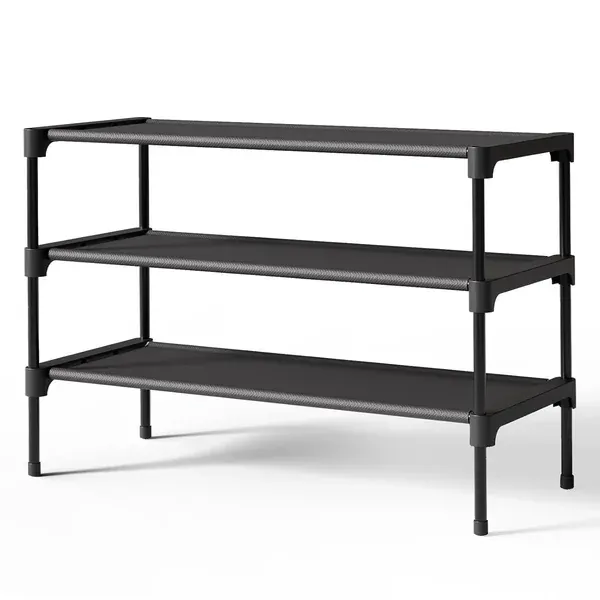
The Kitsure 3-Tier Shoe Rack is a free-standing organizer built around a metal tube and plastic frame structure, with non-woven fabric shelves spanning each tier. According to the manufacturer's product page at kitsureus.com, the unit measures 27.6" x 11.8" x 23.6" (70 x 30 x 60 cm) and is rated to hold up to 12 pairs of shoes. The 27.5" width is notably generous for the category, offering room for sneakers, heels, and slippers across its three tiers. The rack is designed to stand freely without wall anchoring, making it relocatable between spaces such as closets, entryways, garages, or living rooms.
Build Quality and Materials
The frame combines metal tubes with plastic connector pieces, while the shelving surface itself is non-woven fabric. Kitsure states this fabric serves a dual purpose: protecting footwear from scuffs and preventing dust from filtering down between layers — a practical consideration for multi-tier designs. The structure is tool-free by design; assembly relies on press-fit connectors rather than screws or hardware. Published reader coverage from BestViewsReviews notes that one buyer's 12-year-old child assembled the unit independently using only the small wooden hammer included in the box, which is consistent with the manufacturer's claim of a four-step setup process with step-by-step instructions and an installation video provided.
Stackable Design and Flexibility
A distinguishing feature of this rack is its stackable compatibility. Kitsure markets the unit as stackable with two or more identical racks, allowing buyers to scale vertical storage without purchasing an entirely different product. This makes it particularly relevant for renters or students in dorms and apartments who need to adapt to changing spaces over time. Beyond shoes, the manufacturer suggests the rack can accommodate bags and suitcases, though the 11.8" depth is a practical constraint worth noting for bulkier items.
Real-World Fit: Who It Suits and Who Should Skip It
This rack is well-suited to:
- Apartment dwellers and college students who need compact, reconfigurable storage without permanent installation.
- Entryway and closet use where floor space is limited and a wide, low-profile organizer works better than a tall cabinet.
- Budget-conscious shoppers who want a presentable organizer without committing to heavier furniture.
Shoppers who may want to look elsewhere include those with a large collection of deep footwear such as tall boots or wide work boots. As general guidance in the shoe storage category, racks with shallower depths — this unit is 11.8" deep — can cause longer shoes to overhang the shelf edge, a common fit issue noted across this tier of organizer (per
oneabove.co.uk's published guidance on shoe rack depth). Buyers with premium or delicate footwear may also prefer enclosed cabinetry over an open non-woven fabric design, which offers limited protection from humidity or direct light over time.
Reader Reception
Across more than 15,269 Amazon ratings, readers have given the Kitsure 3-Tier Shoe Rack an aggregate score of 4.4 out of 5. That volume of feedback lends reasonable confidence to the rating's stability and suggests broad satisfaction with ease of assembly and the rack's footprint — though individual experiences with frame rigidity and long-term durability will naturally vary depending on load and usage conditions.
Honest Limitations
- At 11.8" deep, the shelf may not fully support longer shoe sizes or bulkier footwear styles without overhang.
- Non-woven fabric, while dust-resistant, is not washable in the conventional sense and may show wear over time with heavy use.
- The plastic frame connectors, standard in tool-free designs at this price tier, are generally less rigid than welded or bolted metal alternatives — a trade-off for the tool-free convenience.
- Stackability requires purchasing additional matching units, which adds cost if significant vertical storage is the primary goal from the outset.
Darrell Steward
1 Feb, 2021Brilliant
This is the best product that has ever been made. It is also one of the best items in the world right now. Definitely go for it.
Albert Flores
17 Oct, 2020Just WOW
It's good to use this product for development as it has very good performance, display quality and all other features.